/ / / /
About
Geometric Gibberish
About Author and Methodologist, Josiah Smith
Geometric Gibberish sits at the intersection of structure and language—built from a foundation that blends analytical thinking with creative expression.
I studied at Case Western Reserve University, earning a B.S. in Management and a B.A. in English. This dual focus shaped how I approach problem-solving: combining systems thinking, pattern recognition, and communication into a single framework. Management trained me to think in processes and efficiency, while English sharpened my ability to interpret, structure, and give meaning to complex information.
That combination is what makes this method work.
Long before that, a portion of my education was shaped at home; Specifically being home-schooled from grades 1 – 3. My father, an engineer, introduced me to systems, circuitry, and the logic behind how things function. My mother, a Speech-Language Pathologist, focused on communication, cognition, and how the brain processes and retains information.
Together, those influences created a unique lens:
- Structure and systems from engineering
- Language and meaning from communication sciences
- Interpretation and clarity from English
- Optimization and execution from management
Geometric Gibberish is a direct result of that overlap. It is not just a visual puzzle system—it is a method designed to train how the brain processes information. By combining structured noise with active interpretation, it strengthens focus, improves recognition, and builds lasting cognitive efficiency over time.
/ / / /
Geometric Gibberish was inspired by the frenetic designs of an engineer's servo schematics
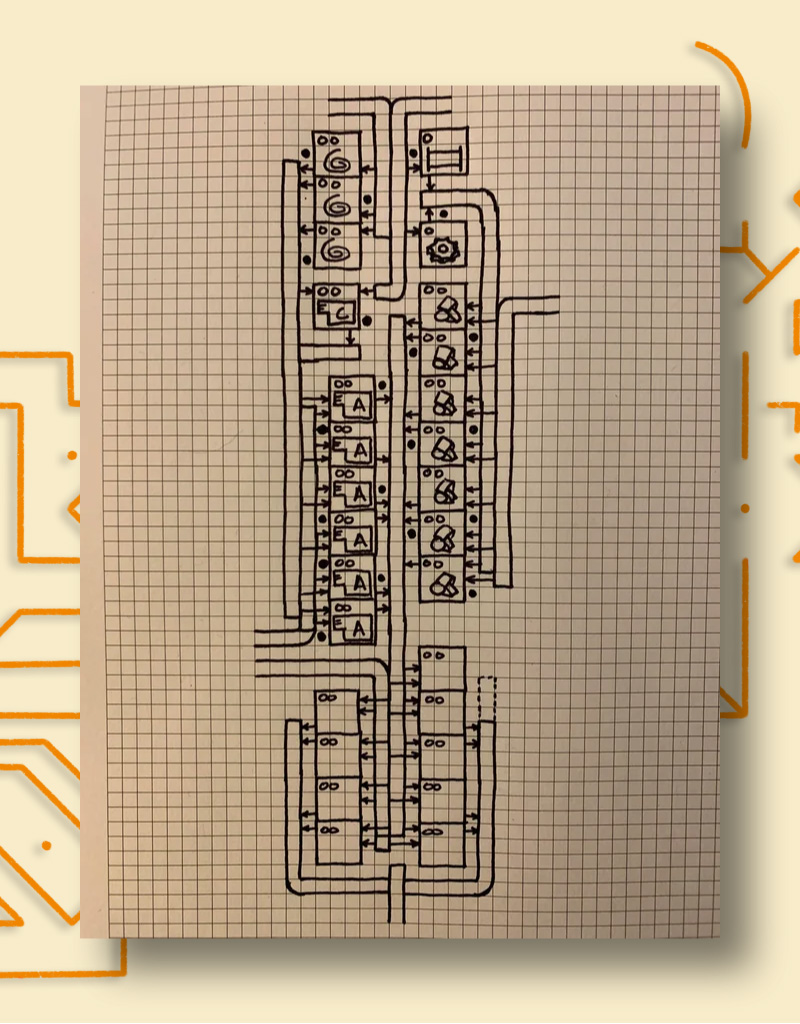
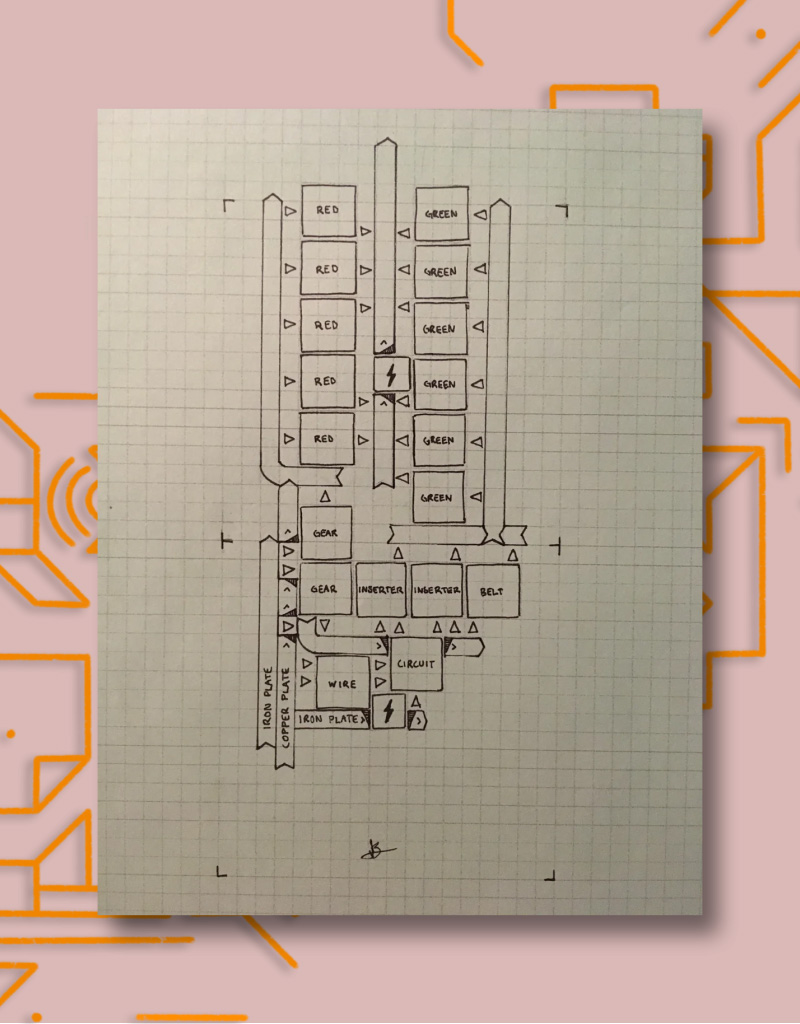
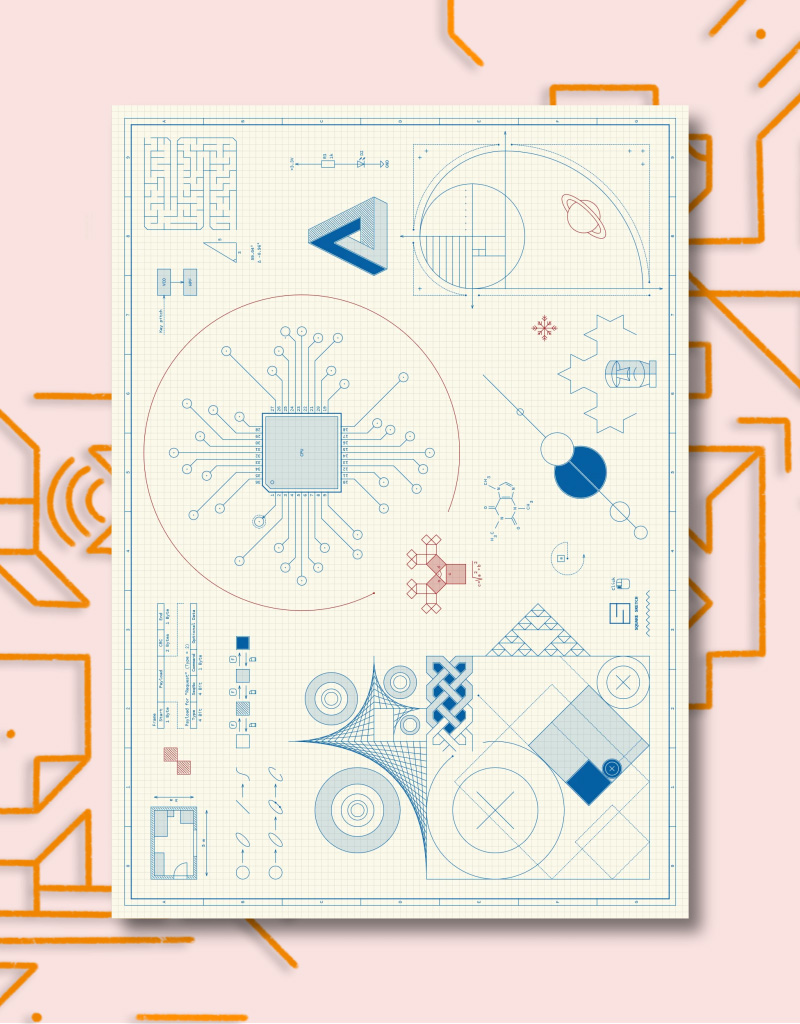
The Geometric Gibberish™️ design was inspired by my dad’s electrical circuits. As an electrical engineer by trade, he would often build circuits at home and then show them to me and my siblings.
He taught us what the different components were and how each interact to allow the technology to function. We even learned how to create our own primitive arduino boards.
A portion of our at-homr lessons consisted of us having to draw the schematics for each of his circuits on thin-lined graph paper. A jagged squiggle represented resistors. Dots represented pins. A table-like symbol represented transistors, and so on...
Although I did not follow in my father’s footsteps to pursue a career in STEM, the fascination stuck with me. I began to use the medium to communicate other ideas: Shapes and lines which evoke whimsical data and an electric mosaic of ideas.
This medium also takes inspiration from other “gibberish” art forms, such as Architectural Gibberish–which imagines fantastical 3D structures on a 2D canvas. Colleagues have also noted that my patterns and symbols lend easily to Hopi geometric forms and even create a hieroglyph of sorts.
Through my career as a designer, I’ve maintained reverence for the Sacred Geometry, which has taught me value in spacing. Believe it or not, this design would be nothing without proper spacing and minimalism is a critical part of help the audience recognize the underlying pattern.
* * *
About Geometric Gibberish
A family business
One of the joys of making puzzles is seeing the light it brings to someone's face.
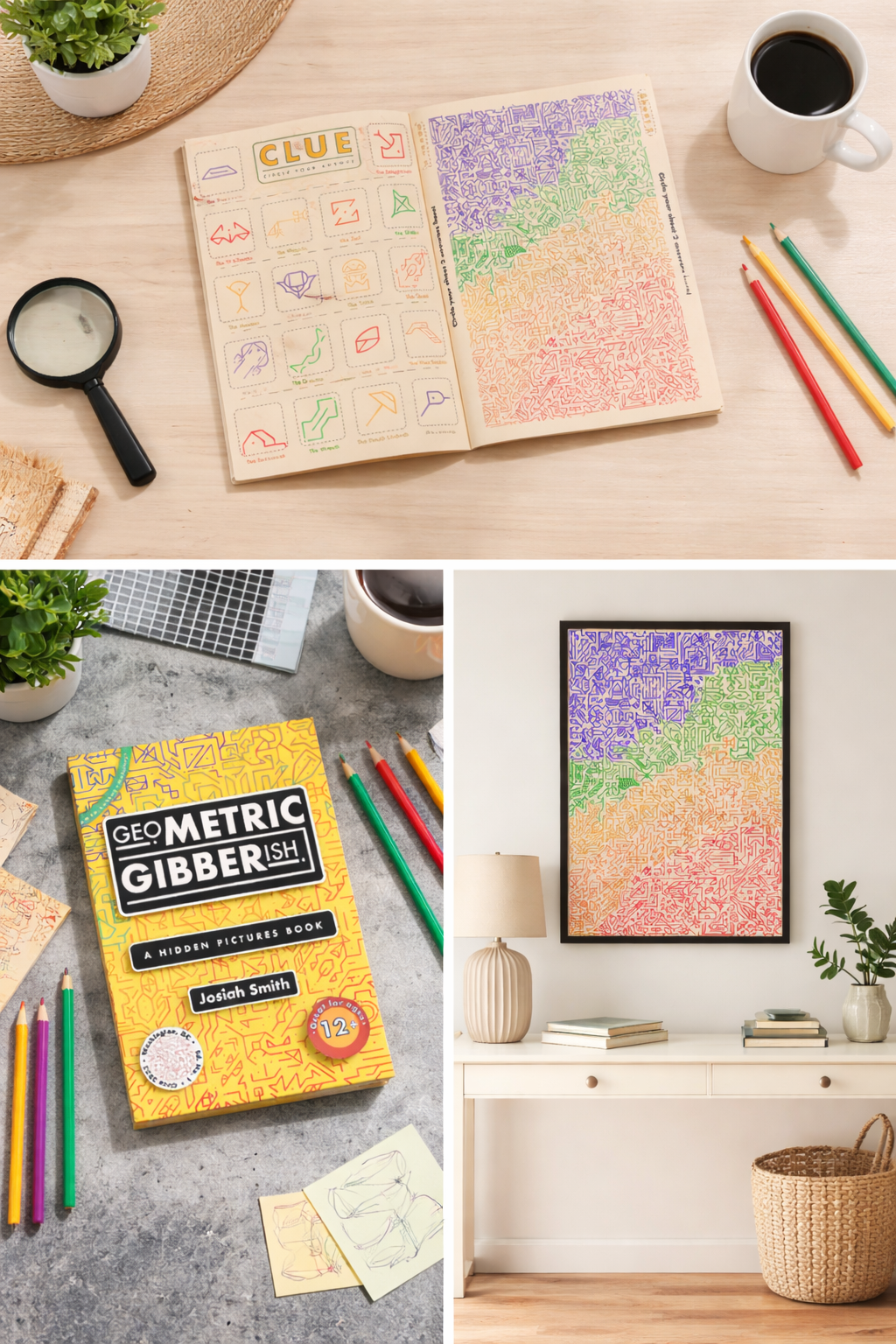
Geometric Gibberish is much more than a riddle--it's a great art piece for your office, nursery, or game room. Make this bespoke piece part of your home today!

 English (United States)
  Spanish