The Skill Behind How You Distinguish Information

Planar (2D) focus is the brain’s innate ability to process symbols, shapes, and relationships on a flat surface. This skill drives how we read, navigate, interpret data, and understand visual systems.

Scan

Recognize symbolic patterns faster.

Discern

Distinguish signal from noise.

Resolve

Retain and interpret within complex system.

Where This Skill Shows Up

Reading & Literacy

Processing words, symbols, and structure.

Geography & Navigation

Interpreting map keys and legends, spatial layouts, and geographic relationships.

Engineering & Technical Fields

Analyzing diagrams, schematics, and layered systems. 

Design & Creative Work

Analyzing diagrams, schematics,Understanding composition, alignment, and hierarchy

Data Interpretation

Understanding charts, dashboards, visual facets, and recognizing anomalies.

Problem Solving

Analyzing diagrams, schematics, and layered systems. 

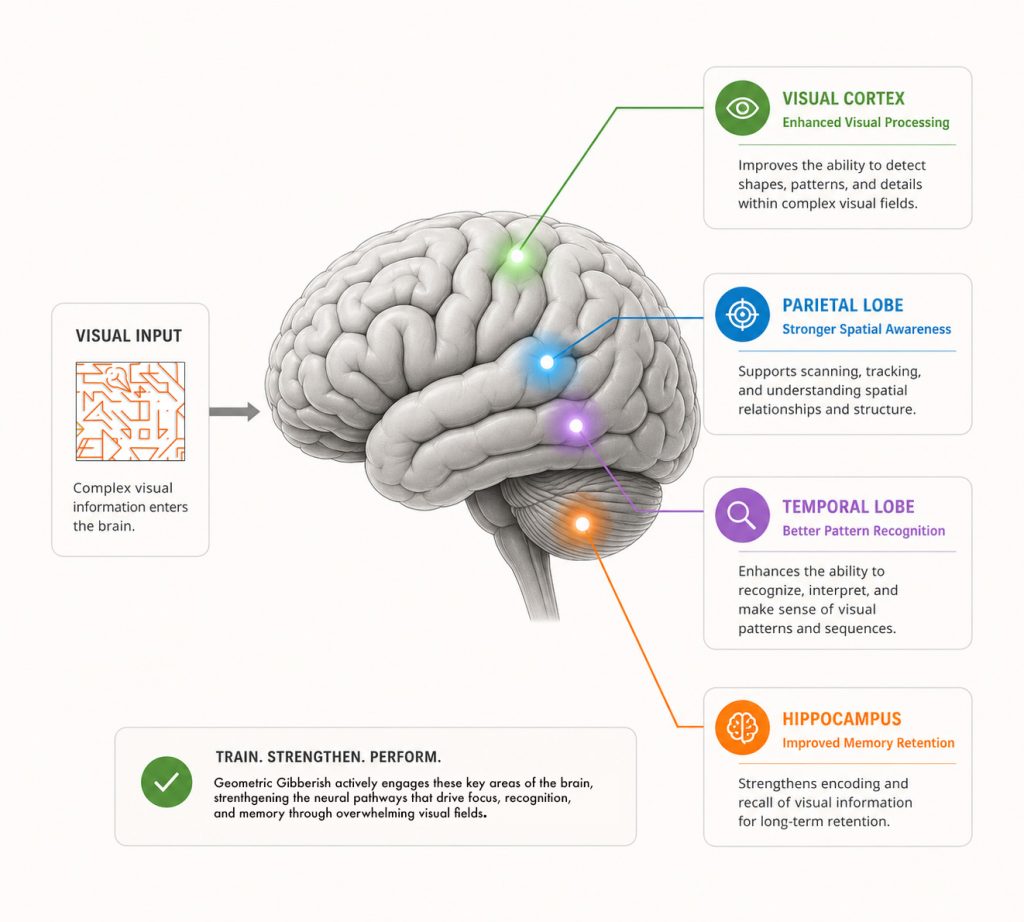
Designed Around How the Brain Processes Visual Information

The brain is naturally wired to detect patterns and assign meaning within visual environments. However, most modern content encourages passive consumption rather than active interpretation.
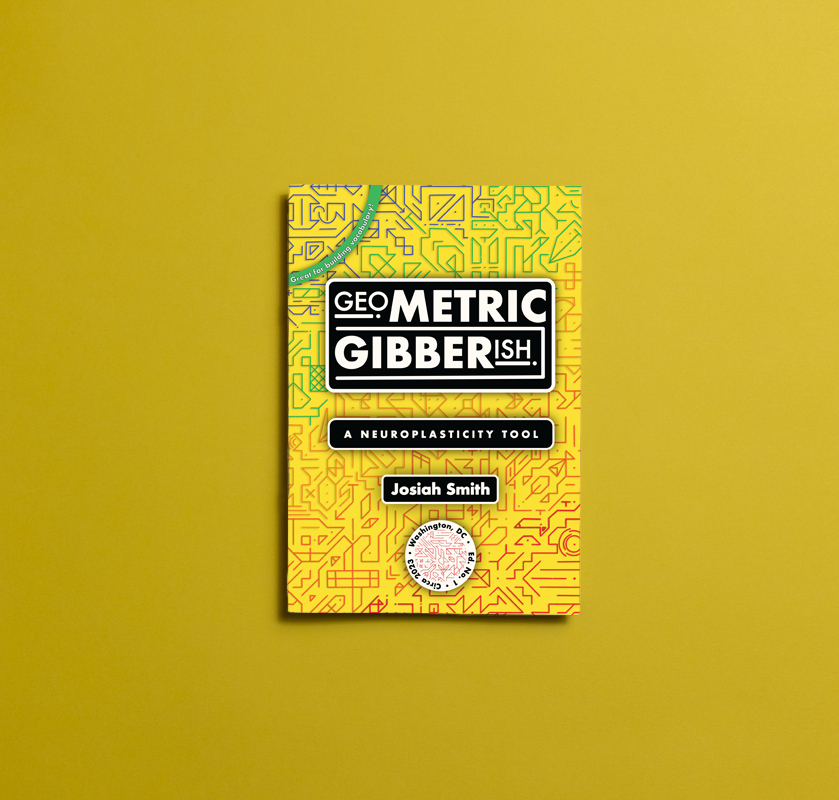
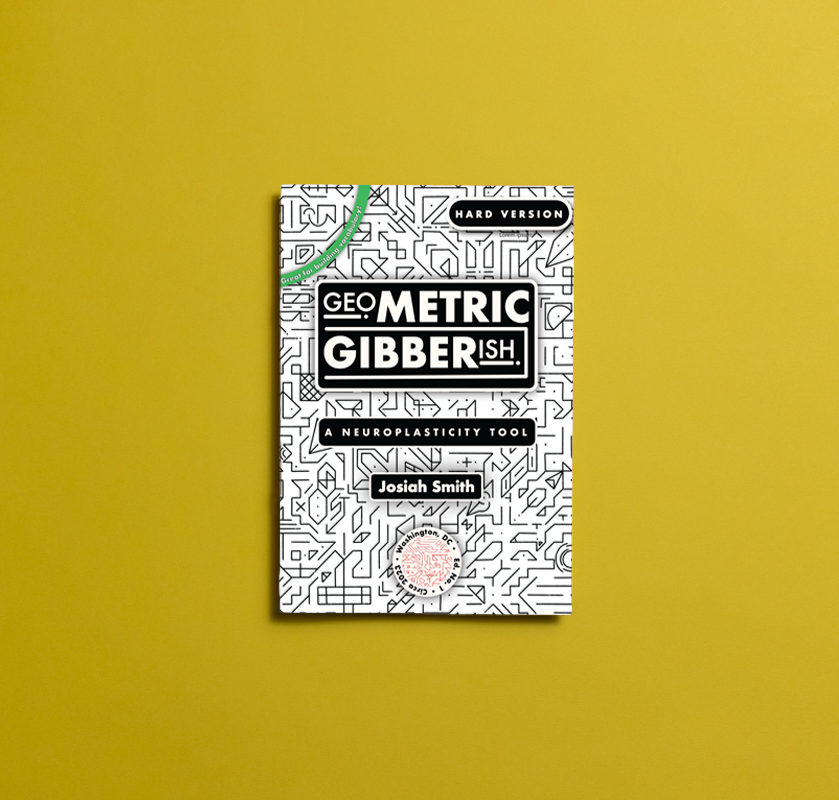
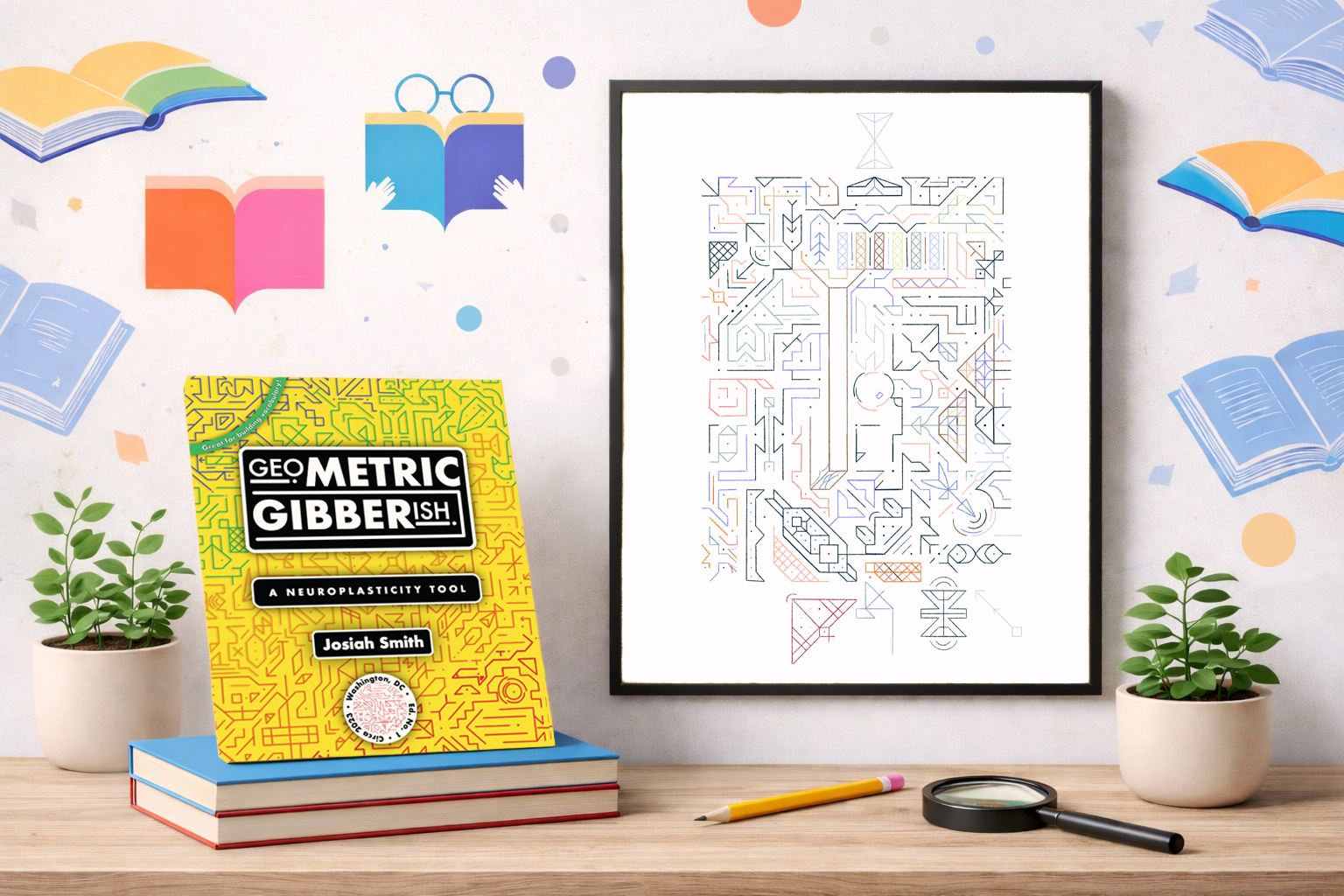
Geometric Gibberish reverses this dynamic—requiring deliberate visual searching and sustained attention. This process strengthens the neural pathways responsible for pattern recognition, focus, and memory.
By engaging in repeated, structured visual challenges, the brain becomes more efficient at identifying relationships, filtering distractions, and retaining information over time.

    Pre-order to lock-in your date!

    Email support within 24 hours

    Pre-order to lock-in discounts!

    All payments are confidential

    en_USEnglish (United States)